





As a fluid power consultant advising clients in a diverse range of industries, it's an issue I deal with a lot.
One recent client, the designer of a three-wheeled vehicle, approached me to design a hydraulic drive. He wanted to power at least two-wheels, ideally three.
To keep cost to a minimum, the machine designer asked me to consider gear pumps and motors.
A gear pump or motor in good condition is 85 percent efficient.
So a gear pump driving a gear motor has a best-case efficiency of 0.85 x 0.85 = 0.72. That's 72 percent - not considering losses through valves and conductors.
But say a gear-type flow divider was included to achieve multi-wheel drive. The theoretical efficiency would now be 0.85 x 0.85 x 0.85 = 0.61. That's 61 percent, not including losses through valves and conductors.
Compare this with a chain drive in good condition, which is 97 to 98 percent efficient. This explains why you don't see any hydraulic bicycles around!
In this application where the available input power was limited by space and weight, the question I had to ask my client was: Can you afford to lose 40 to 50 percent of available input power to heat?
In his case, the answer was no.
Contrast this example with another client for whom I'm advising on the design of a 6,000 ton press.
Regardless of efficiency, hydraulic power transmission is really his only option.
But this is also a relatively efficient use of hydraulics.
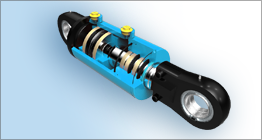
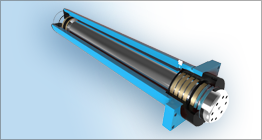
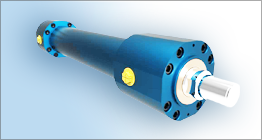
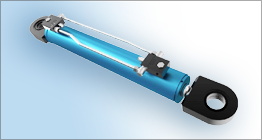
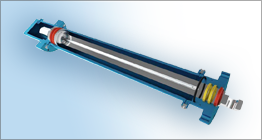
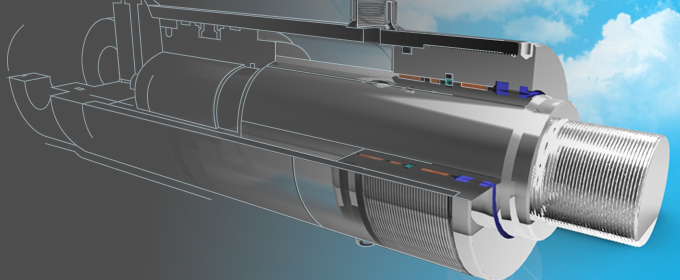
One of the reasons for this is the efficiency of a hydraulic cylinder approaches 100 percent.
And because it's a high-pressure application, piston pumps are essential. The overall efficiency of an axial piston pump in good condition is 92 percent. So the theoretical efficiency of the press hydraulic circuit is 0.92 x 1.00 = 0.92 or 92 percent - not including losses through valves and conductors.
A significant, 'built-in' inefficiency in this application however, is the compressibility of the hydraulic fluid - the subject of my next hydraulics message in few days time.
By Brendan Casey
.jpg)